
Drawing Rome
On a recent trip, sketches, and six whole days of art.

I’ve had very little formal education in art. It’s as if my whole life I’ve been gravitating towards it, but the field kept getting further and further away from me, until I could only see it on the horizon.
Earlier this year, I had made a conscious decision that I wanted to devote myself to the arts. I wanted to spend some time learning and going to see new places. I chose the heart of the arts, Rome.
With a little bit of research, around April, I stumbled on a very interesting offer – 6 days of art and sketching in Rome (aka “Drawing Rome”).
This was to be no ordinary course with no “formal teachings”, at which my heart sank a little. But my gut told me to go for it. It was an instinctual move, something I wanted to do for myself.
I packed my favorite art supplies (plus a very small luggage), and off I went across the sea, to the train station, and landed in Rome. Greeted by one of my favourite people, I felt warm and home. Rome charmed me from the car ride to the center. Having seen 0.01% of Rome, my thoughts were about when and how I would come back here.
A lot happened in a week, and now, as I sit down to process it, I begin to see with more clarity. I thought long and hard on how to structure this newsletter about my experience with “Drawing Rome”. And the most natural thing that comes to me is to do it in the form of mini lessons, which I only remember as I flip through my sketchbook. I split it up in a way where I describe the lesson, but name it the first thing that comes to mind. This way, I can tell a fragmented story about my experience.
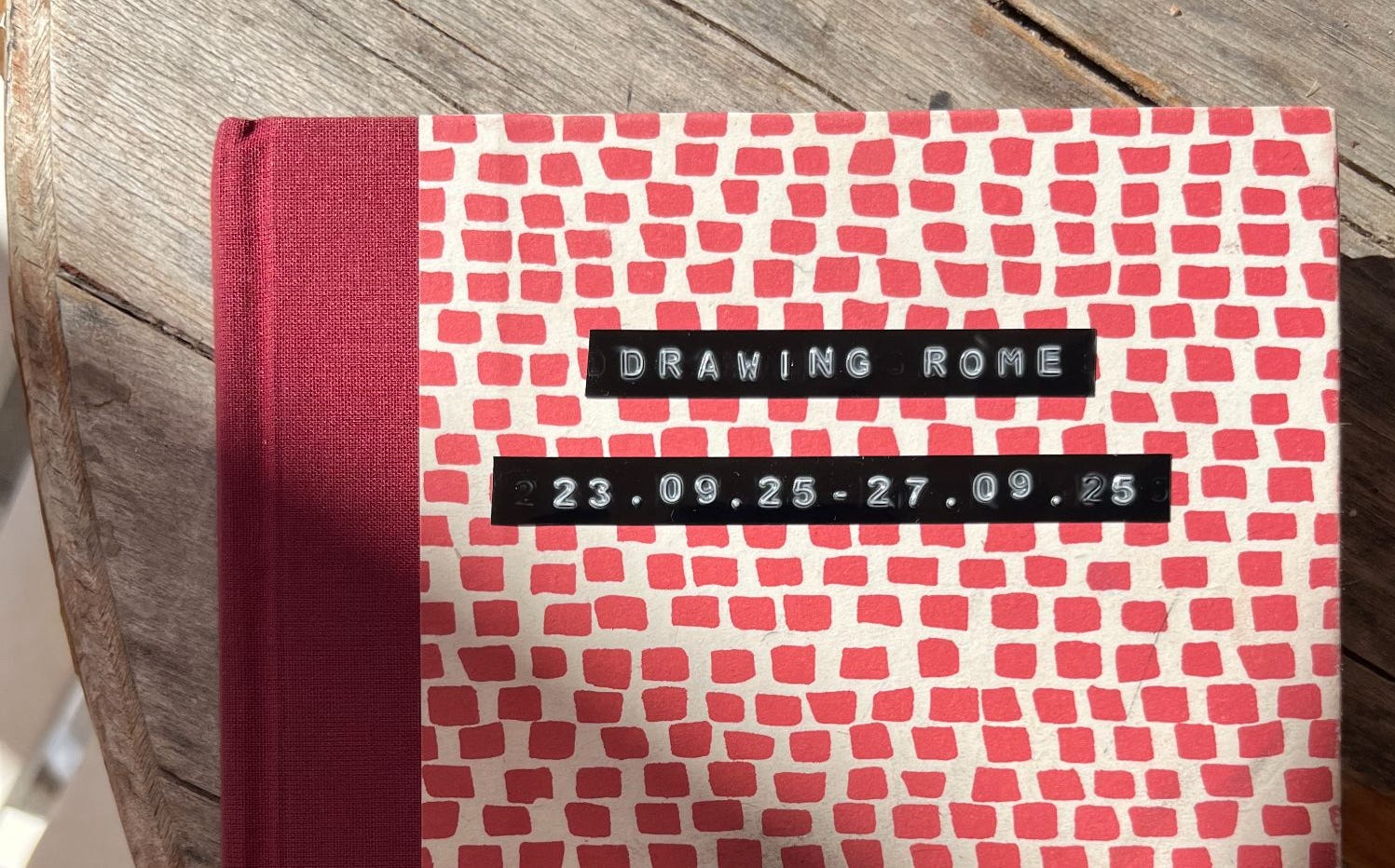
15 lessons from “Drawing Rome”
There was a lot of walking involved and a whole lot of drawing! Little tasks, small time intervals (sometimes 3 minutes per sketch), and fascinating stories about the history of ancient Rome. Scattered all around the city and going as far as Tivoli – a week to remember.
Here are all the things I’ve learned, which I hope, in some ways, may help you too.
1. Loosen up
Our first exercise was to experiment with art materials in a loose, abstract way. And I think this is super important – to always get a feel for your tools of choice. Don’t worry about making ‘ugly’ marks as there is no such thing. Let your hands and tools do what feels natural to you. Make some lines. Consider this: What is a line? And what can a line express?
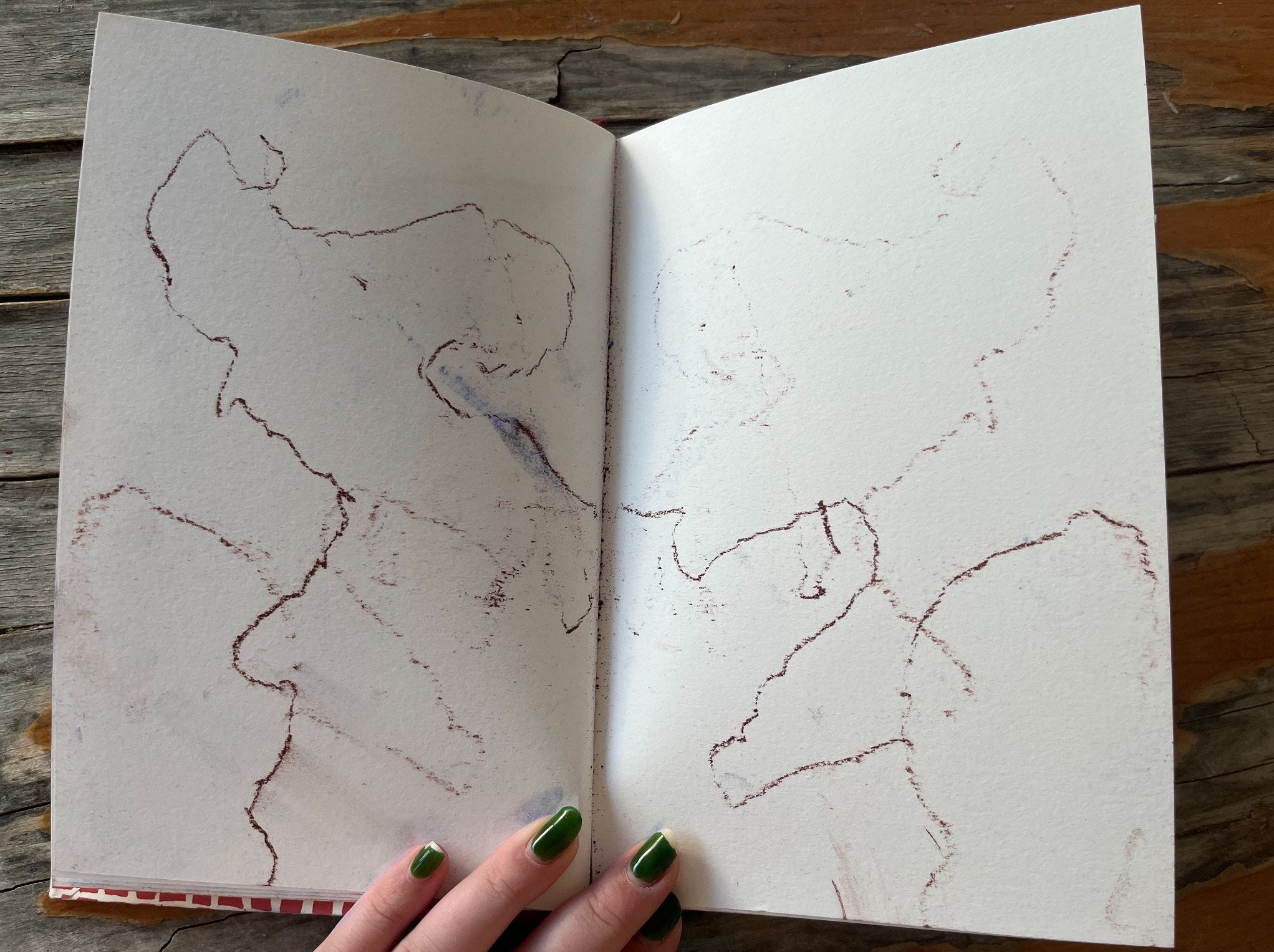
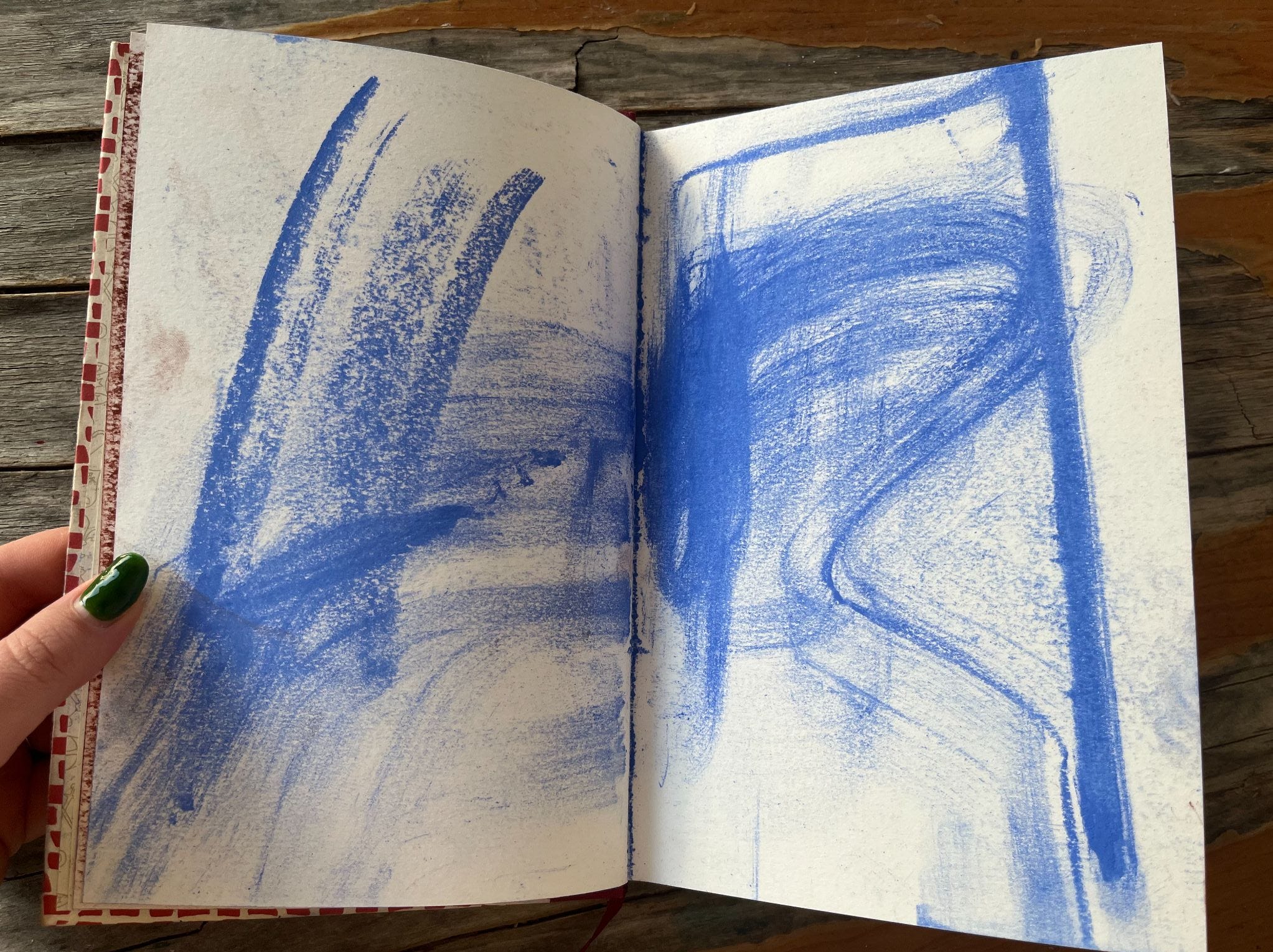
2. Don’t be afraid of a little color
Pick up your colors and do the same. I drew a continuous line letting the pastel guide my hand on the page. And in a way, it was beautiful. Allow yourself to have the freedom to just be, to have a dialogue with white pages.
3. What lines say about you
There was an interesting exercise we had to do. You had to draw a straight line across an open spread of a sketchbook, and then draw another one parallel to it as close as you could. So on and on you do this until you’ve filled both pages.
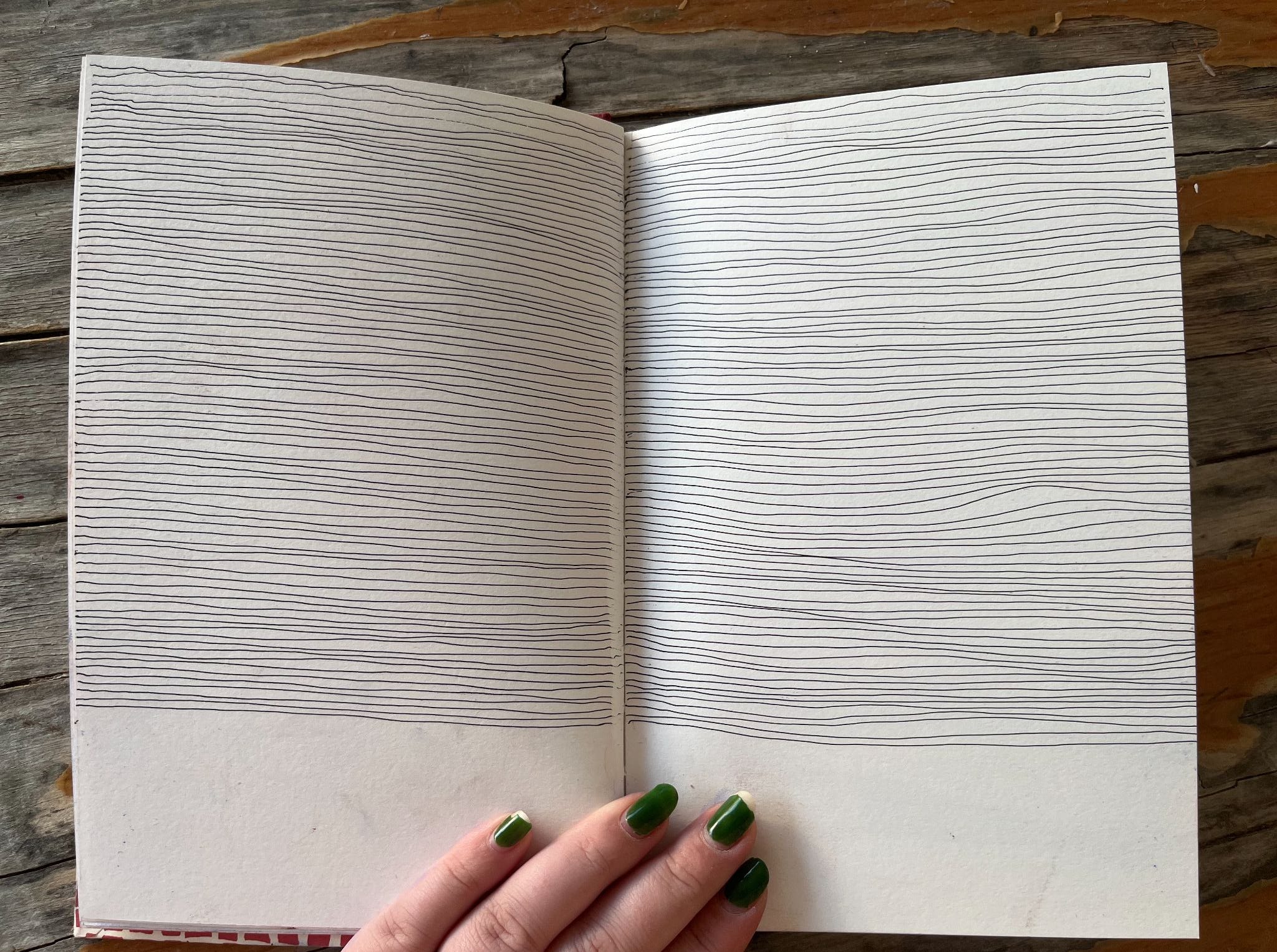
David (the artist and host of the workshops) told me that there’s something interesting in my delicate touch. He said a few other things that made me wonder how he picked up so many things about me based on a simple line exercise. A mystery to me.
4. Draw blind
And half blind! One of my favorite old but gold exercises is to draw outlines of objects blind. We went to a museum where there were ancient artefacts, and we drew all kinds of vases blind. In a way, it was some of my best work. The point is to learn how to see, and how to spot details and big shapes in a natural way.
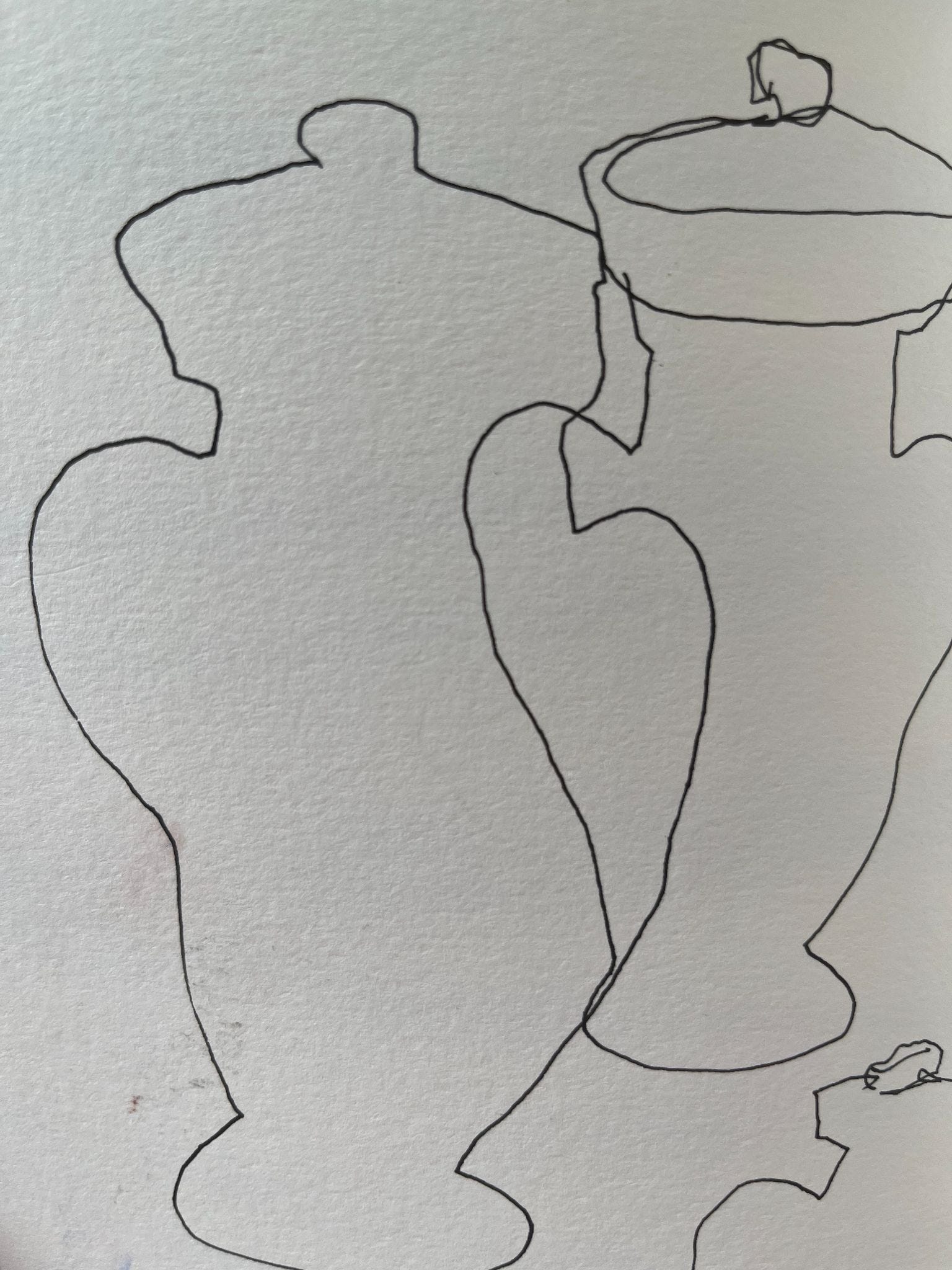
5. Drawing contours trains the hand (and the eye)
You can also practice looking at an object 90% of the time, and the paper 10% of the time. This way, you’re focusing on seeing, really seeing what you’re doing and observing in detail what you’re portraying.
At this point, I was mostly using my fountain pen, despite getting a bag full of art supplies. A decision I’ll slightly regret later.
6. One idea or too many ideas?
My most valuable feedback on the first day was that I have many creative ideas (perhaps too many), and that sometimes it’s best to follow through on one or two good ones. I thought about this for a long time, and reflected on how many projects I’ve picked up in the recent past only to abandon them.
7. Discard your favorite tools
David brought us hand-made pastels and watercolors, charcoal, pencils, and much more. I stuck to a fountain pen having fallen back to my comfort zone. Sometimes you have to discard your favorite tools to experiment with something new. It’s never a bad thing in the end. Don’t be afraid of experimenting with art supplies. They are there to serve a purpose.
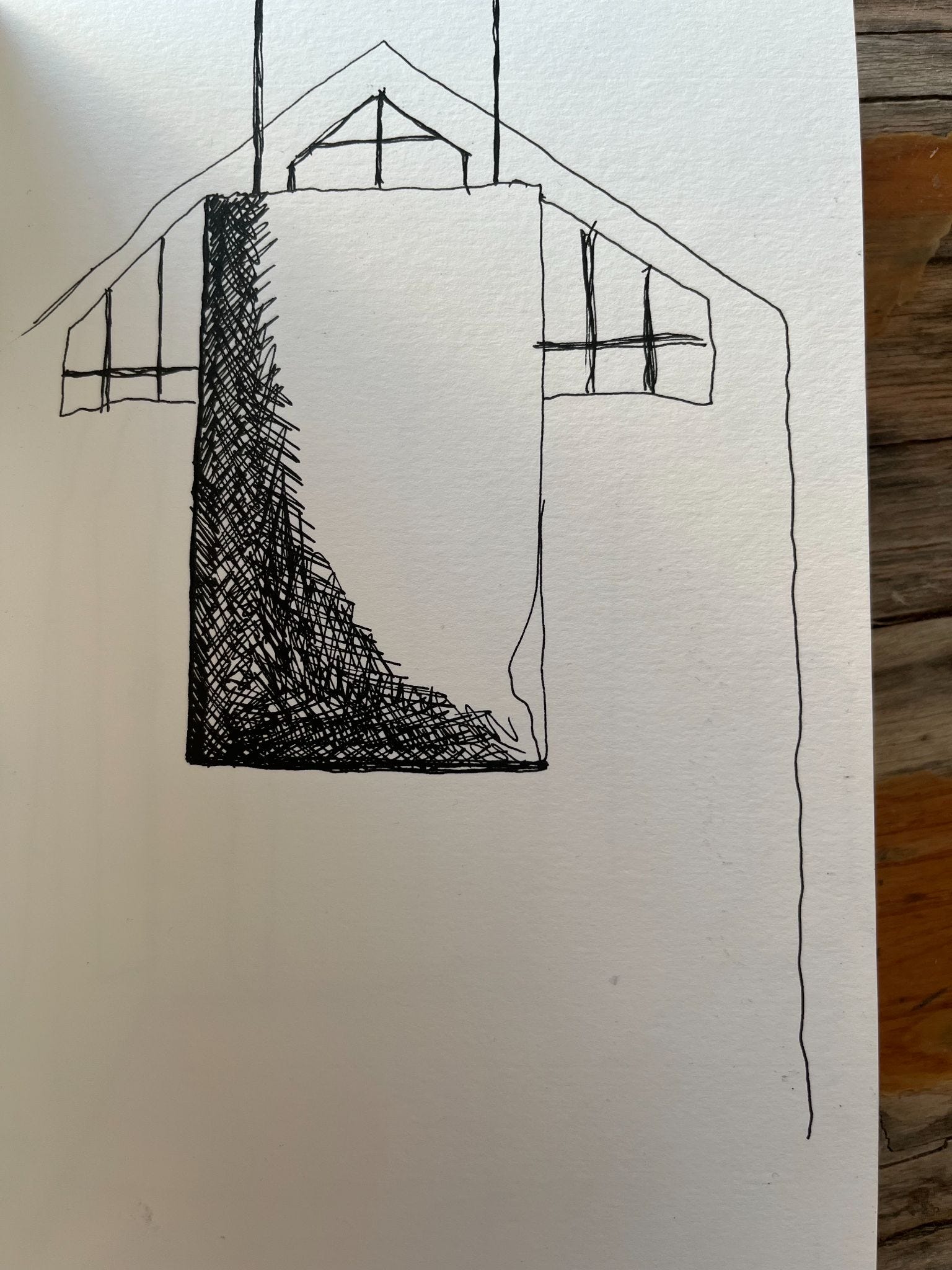
8. Perspective exercise
We walked the streets of ancient Rome and drew and drew until our eyes and legs hurt. But it was great and we all loved it. One of my favorite exercises was to use the same page, but draw different perspectives of a structure as you’re moving closer to it. I ended up with a bunch of scribbles, but learned how to use a new technique for my work.
9. The magic of pencil
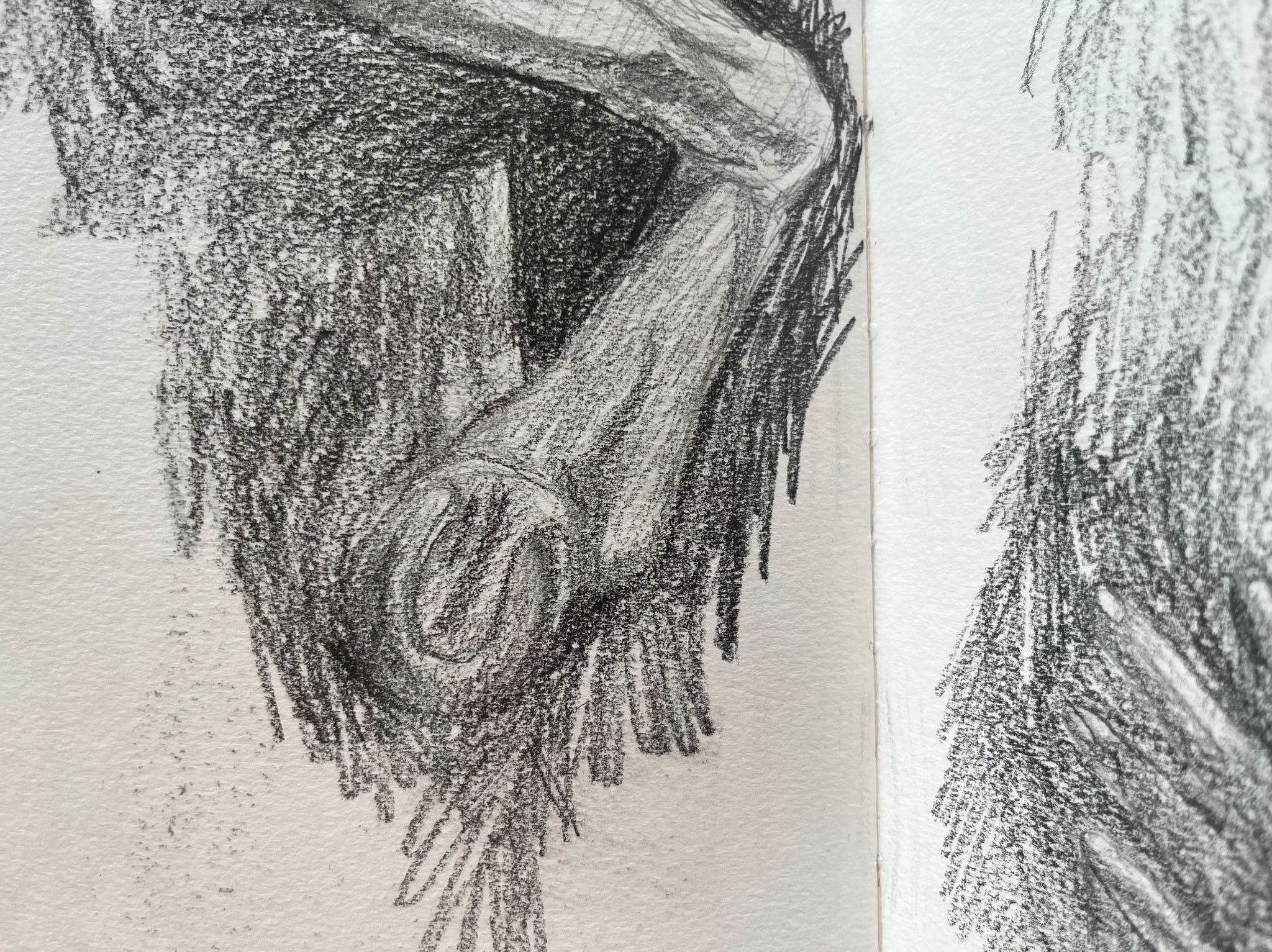
And then, we had to sketch Caravaggio’s paintings. If you’ve ever seen one, you’ll know that it is mission impossible on steroids. Instead of trying to recreate the image, we were instructed to look at the negative space and shadows.
I loved this exercise so much, that in the process of drawing, I fell in love with pencil again.
10. Proportional dividers are no joke
The towering columns of Rome welcomed us and intimidated us at the same time. When drawing divine perfection, there is only so much you can capture with architecture. This is where proportional dividers came to the rescue. I have never seen one in real life, but I now own one.
I didn’t test it in Rome, but I’m excited to try it in real life now that I’m back home.
11. You’re no Caravaggio, but you can draw
Bottom line is - anyone can draw. And everyone, all 11 of us participating, created beautiful work. Some had no formal education, like me. Some were practicing artists, some enthusiasts. With the right guidance, I believe anyone can draw. And everyone will have a different line, and everyone will come back with something different having drawn the same subject. And that’s beautiful.
12. Forms and the appeal of 3D
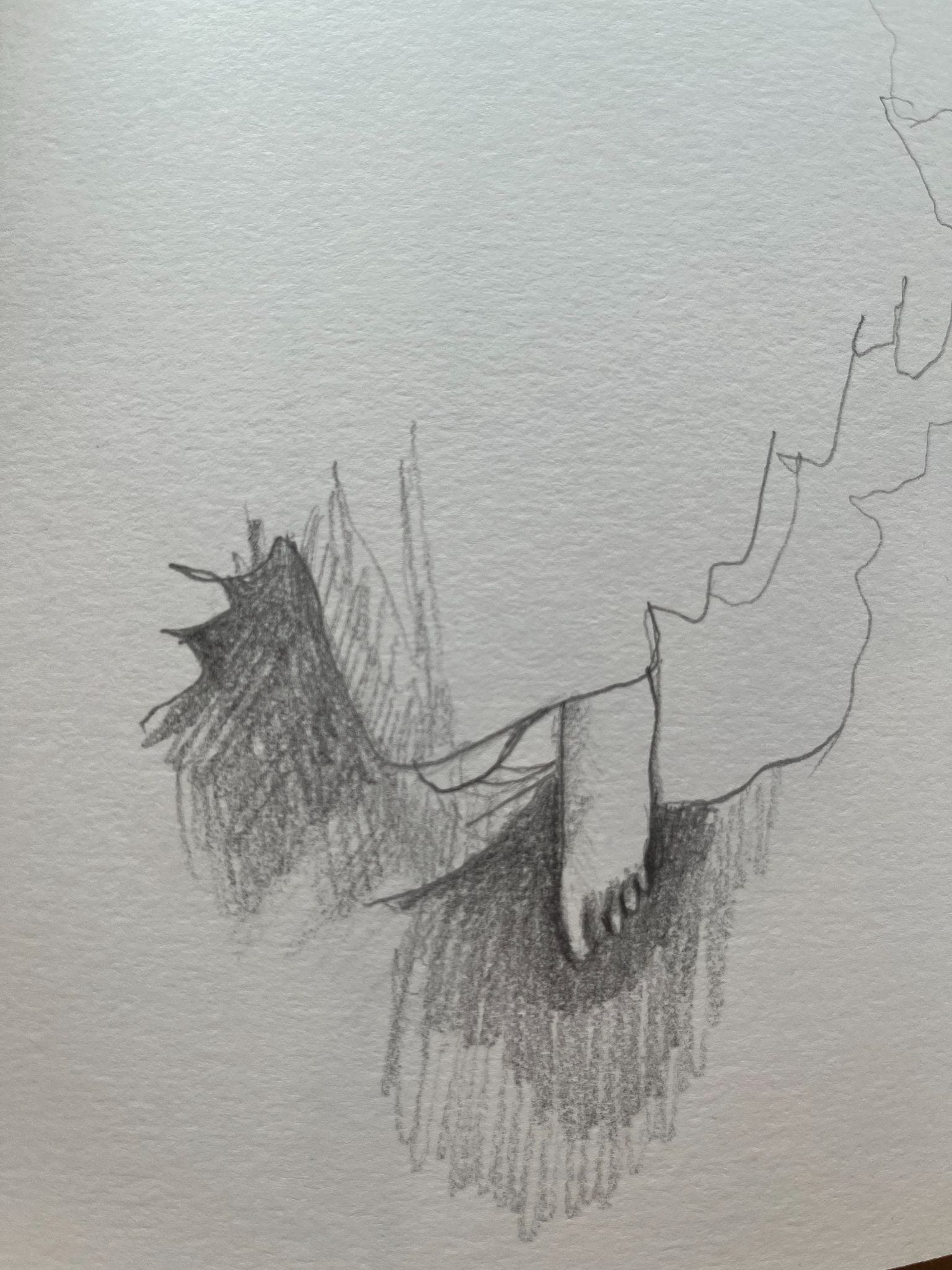
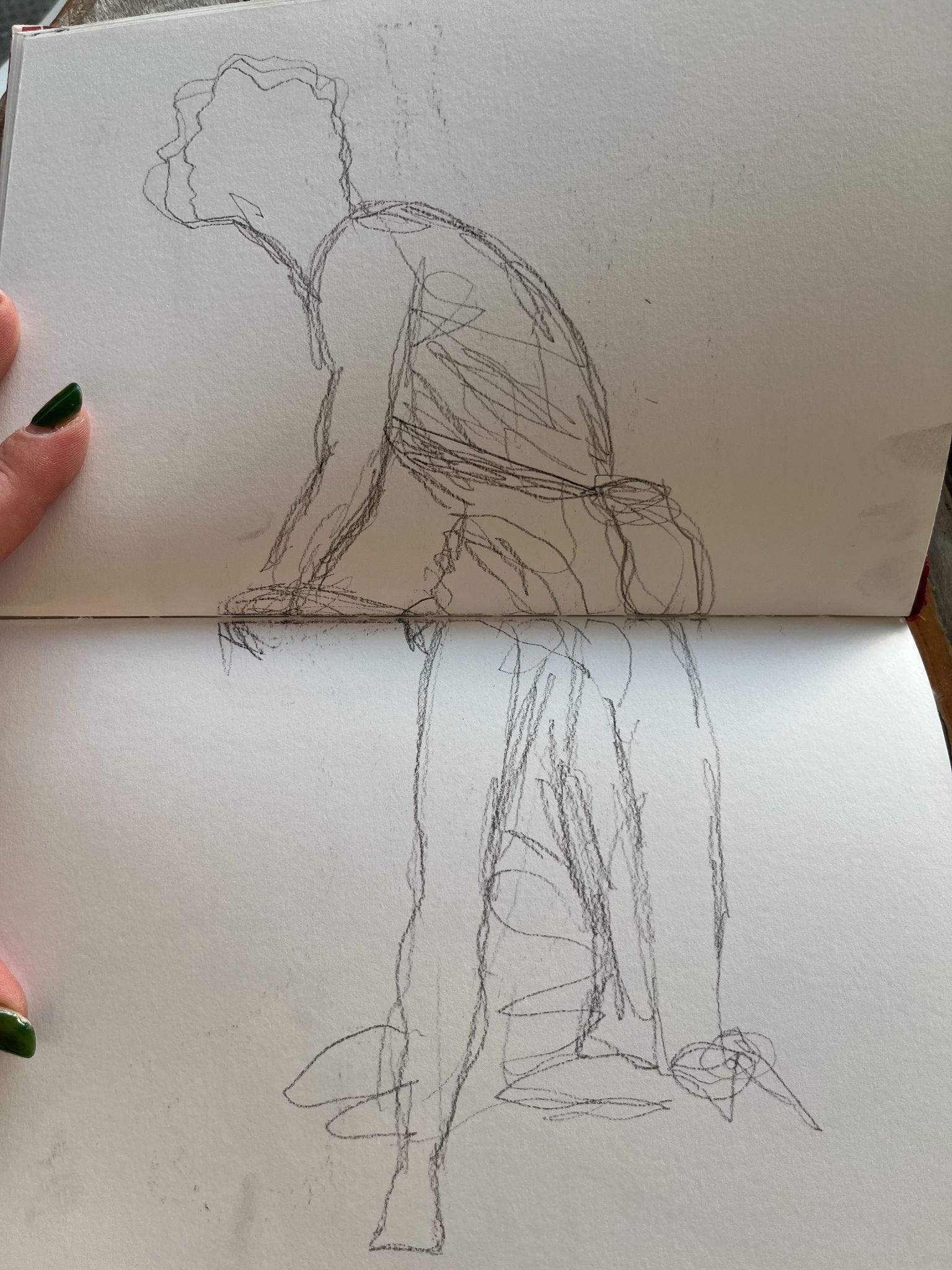
Drawing sculptures was my ultimate challenge. But David said that it’s not about recreating what we see, but rather capturing the forms and movements we see. With a loose line, I went for it.
I think I produced some of my best work, despite it not looking like anything. I learned to draw and see, really see. I learned to make the lines dance in relation to each other, and to focus on spaces, what my eyes could see. Drawing is about seeing.
13. Warm up to watercolors
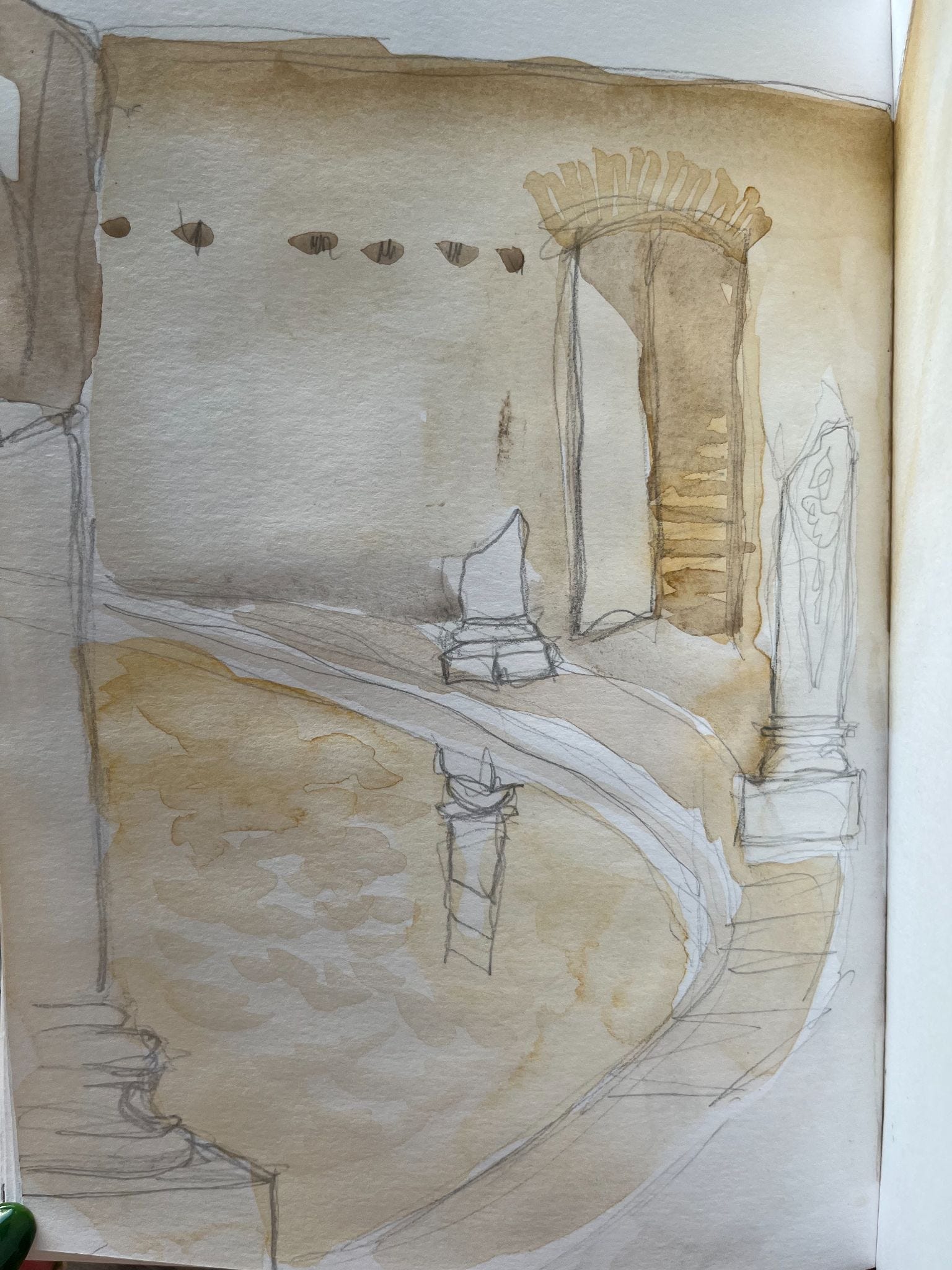
We were advised to stick to one color. I disregarded this advice, and it backfired. I tried and tried to work with these beautiful handmade colors, but everything was a disaster.
Finally, I got my waterbrush out and stuck to 1 color. Which was really enjoyable to layer and create dimension, as well as capture shadows. Villa Adriana was a lot to take in, but I came back with a very clear memory of the spot I chose to sit in and sketch.
14. Capture movement
Towards the end, we walked down a square and drew people in proportion to space. I also think I went backwards in my progress, but everyone seemed to like my work. Lesson learned - the exercise is not about pretty pictures, but movement and what movement can be on a two dimensional surface.
14. Learn to see, then learn to draw
I’ve mentioned that drawing is about seeing. And it’s so true because pausing, thinking, and looking at a subject makes you more aware of what’s really in front of you. Spend less time looking at your paper trying to make it perfect, and trust your hand to coordinate with your eyes and brain. Magic comes from the trust you give yourself as an artist.
What I loved most about “Drawing Rome”
Sometimes we had three minutes to draw a sketch. Sometimes an hour. But David said that a good drawing takes about a week. This really opened up my eyes to the artistic process. I rush a lot.
My favorite thing about this program was the feedback I got to bring back home with me. I need the knowledge to sediment, and then off I’ll go with all my new tools to sketch somewhere serene. Now I have the confidence to approach any subject and draw it my way.
Did I love my work? Probably not. But did I grow as an artist in this timeframe? Absolutely.
Rome taught me more in six days than I thought possible. The city feels endless, but so does the act of drawing. I left with half-filled pages, new tools, and the sense that this is only the beginning of my exploration of light, color, spaces and places.
This is fabulous and sums up our trip beautifully 😘
Oh my God! I literally got the notification about this letter of yours, sitting in the stairs on St Peters Square in Vatican